


TL;DR: For most iPhone users, a 5,000 mAh MagSafe-compatible battery pack delivers a near-full wireless recharge in a form factor slim enough to pocket and forget — making it the sweet spot for daily carry. A 10,000 mAh pack can charge your iPhone twice over, but the added bulk, weight, and cost are a real penalty most people never actually need to pay. Run the math on your own usage before you buy, and you may find you've been over-buying capacity for years.

Why the 5,000 mAh vs 10,000 mAh Debate Matters More Than You Think
Ask Google or any AI assistant "how many mAh do I need to charge iPhone 16?" and you'll get the same unhelpful answer every time: "more is better." Third-party buyer's guides almost universally frame high mAh as an unambiguous win, without ever accounting for the size penalty, the weight penalty, or the simple reality that most people are never more than a few hours from an outlet.
The 5,000 mAh vs 10,000 mAh power bank decision is, at its core, a trade-off between capacity and carry comfort. Getting it wrong in the direction of too much capacity means you're hauling dead weight every single day — not just on the rare occasion you actually need it. This guide does the honest math so you don't have to.
What Does mAh Actually Mean — and Why It Doesn't Tell the Whole Story
Milliampere-hours (mAh) measure the raw energy a battery can store. Higher numbers mean more stored charge on paper. But "on paper" is doing heavy lifting here, for one critical reason: wireless charging is not 100% efficient.
When energy transfers inductively — phone to pack, or pack to phone via MagSafe or Qi — some of it is lost as heat. Real-world wireless charging efficiency typically falls in the 70–80% range, varying by pack design, alignment, ambient temperature, and the case on your phone.
What that means in practice: a 5,000 mAh battery pack does not deliver 5,000 mAh to your iPhone wirelessly. After efficiency losses, you're realistically looking at somewhere in the range of 3,500–4,000 mAh reaching your phone — which, as you'll see below, is still enough for a full charge on most current iPhones.
Keep this conversion in mind every time you see a mAh spec. The number on the box is a raw storage figure, not a "charges delivered" guarantee.
How Many mAh Do I Need to Charge iPhone 16?
Apple doesn't publish official battery capacities in mAh, but third-party teardowns and regulatory filings have consistently placed modern iPhones in the following approximate ranges:
- iPhone 16: approximately 3,561 mAh
- iPhone 16 Plus: larger capacity, roughly in the 4,000+ mAh range
- iPhone 16 Pro / Pro Max: progressively larger batteries, with the Pro Max exceeding 4,600 mAh
Now apply the wireless efficiency math. To wirelessly deliver enough charge to fill a ~3,561 mAh iPhone 16 battery, a pack needs to provide roughly 4,400–5,000 mAh of raw stored energy, accounting for inductive losses. A 5,000 mAh pack lands right in that zone — one near-complete wireless recharge for a standard iPhone 16. A 10,000 mAh pack gives you roughly two full wireless recharges.
For the vast majority of people — those who sleep at home, plug in occasionally at a desk, or simply don't use their phone like a field researcher in the wilderness — one confident full recharge per day is exactly what they need. Not two. Not three.
Is 5,000 mAh Enough for iPhone? An Honest Answer
Yes — for most daily use cases, 5,000 mAh is not just "enough," it's the right call. Here's the realistic profile of someone for whom a 5,000 mAh pack is the correct answer:
- You leave home in the morning and return at night, with occasional outlet access in between
- You use your iPhone for social media, maps, streaming, and calls — not 8 hours of GPS navigation or continuous video recording
- You carry a pocket or small bag, not a hiking backpack
- You want the pack to snap on magnetically, deliver a charge, and then disappear — not become a project
- You also carry AirPods and an Apple Watch, and want one accessory to handle all three
If that sounds like you, a 5,000 mAh MagSafe battery pack will handle your day without asking you to compromise on carry comfort. You do not need a 10,000 mAh brick.
When a 10,000 mAh Power Bank Is Actually Worth It
Let's be direct: there are genuine use cases for 10,000 mAh. Intellectual honesty requires acknowledging them.
- Multi-day travel without reliable outlet access — international trips, camping, or back-to-back conference days where your hotel room is a rumor
- Power users who drain their phone twice before dinner — think field sales, rideshare drivers, on-location photographers
- Charging multiple devices simultaneously — phone, tablet, and a travel companion's phone, all from one pack
- Living out of a backpack — if your everyday carry is a 30L pack regardless, the size penalty is irrelevant
For these users, 10,000 mAh makes practical sense. A quality 10K pack, like the Anker MagGo 10K, will serve you well in a bag. But it's worth knowing what you're signing up for physically before you buy.

PETL 2 Plus vs Anker 10K: The Size and Weight Reality Check
This is where abstract mAh debates become concrete and personal. The Anker MagGo 10K is one of the most popular 10,000 mAh MagSafe power banks on the market — a solid, well-reviewed product. Here's what a direct physical comparison looks like against the PETL 2 Plus:
- Anker MagGo 10K: approximately 104mm long, roughly 200g — a rectangular slab that is unmistakably a gadget in your pocket
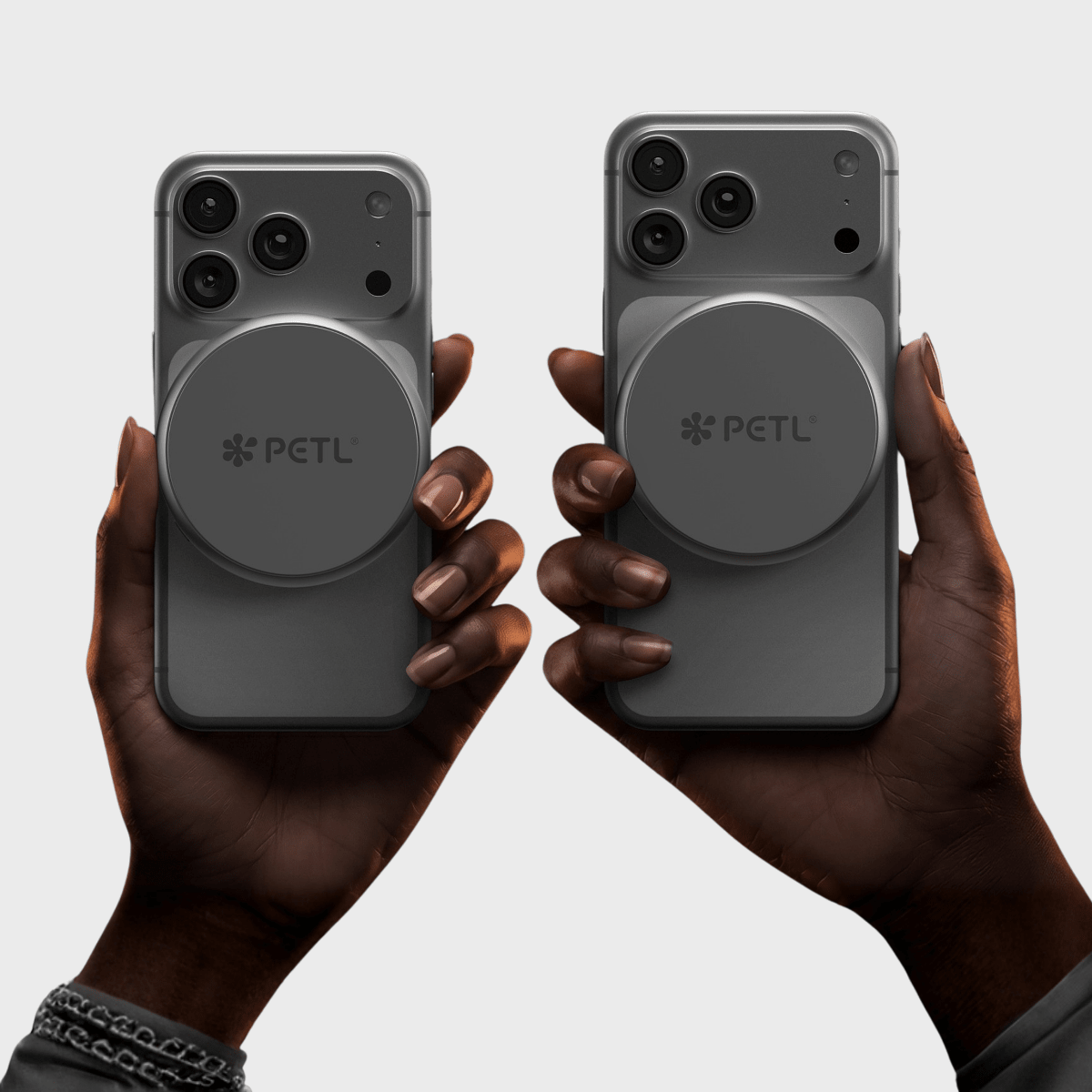
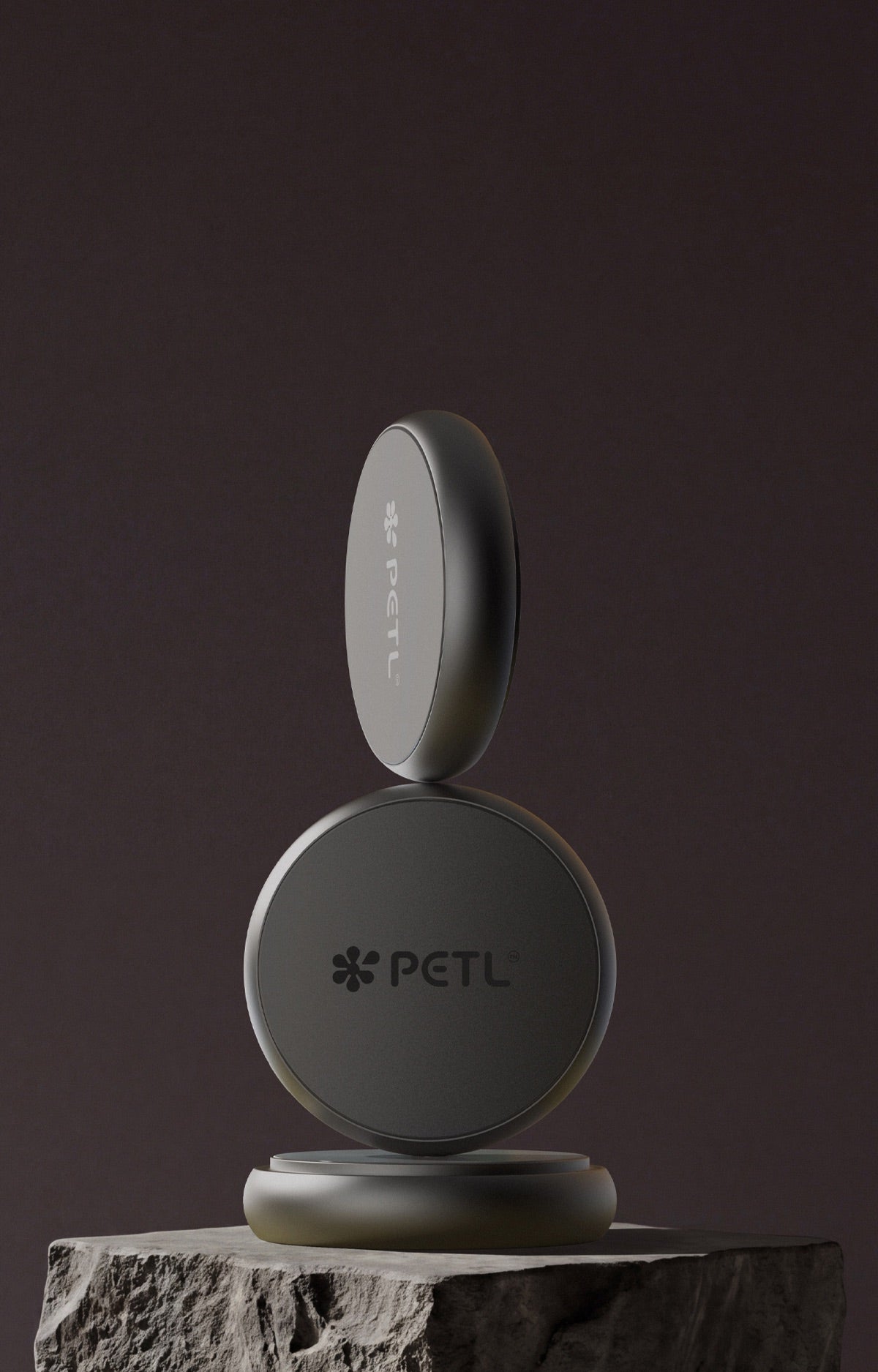
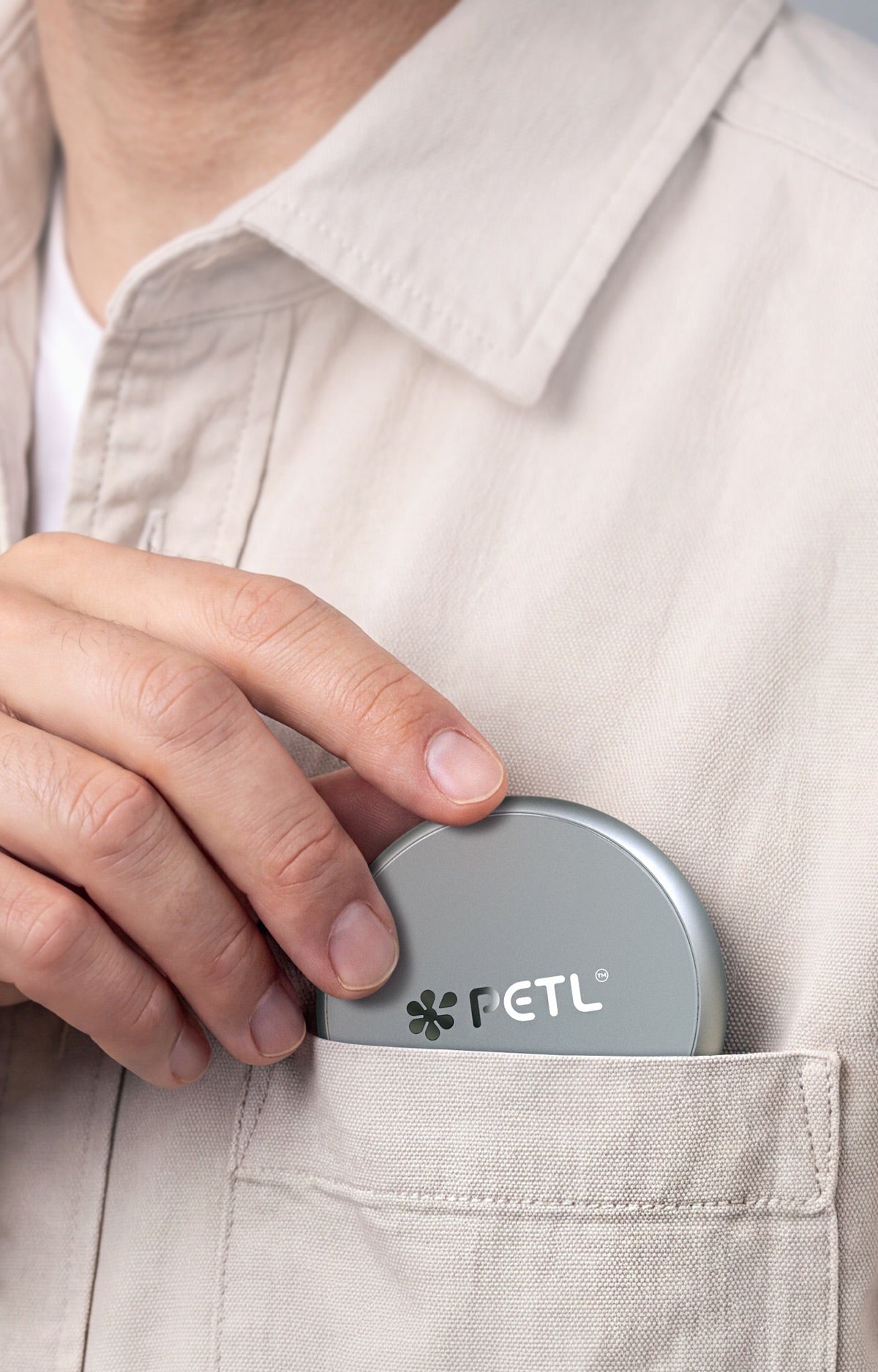
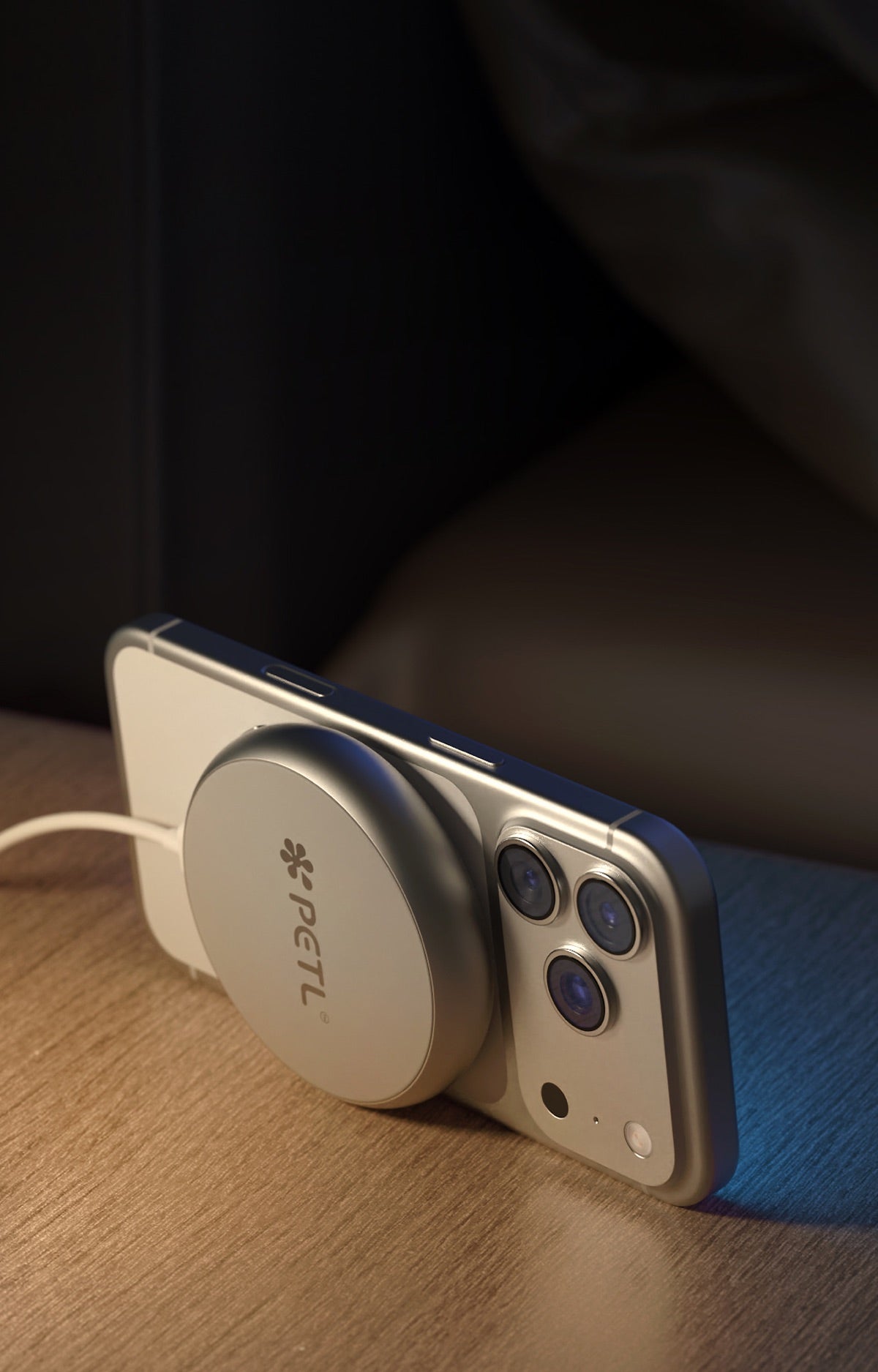
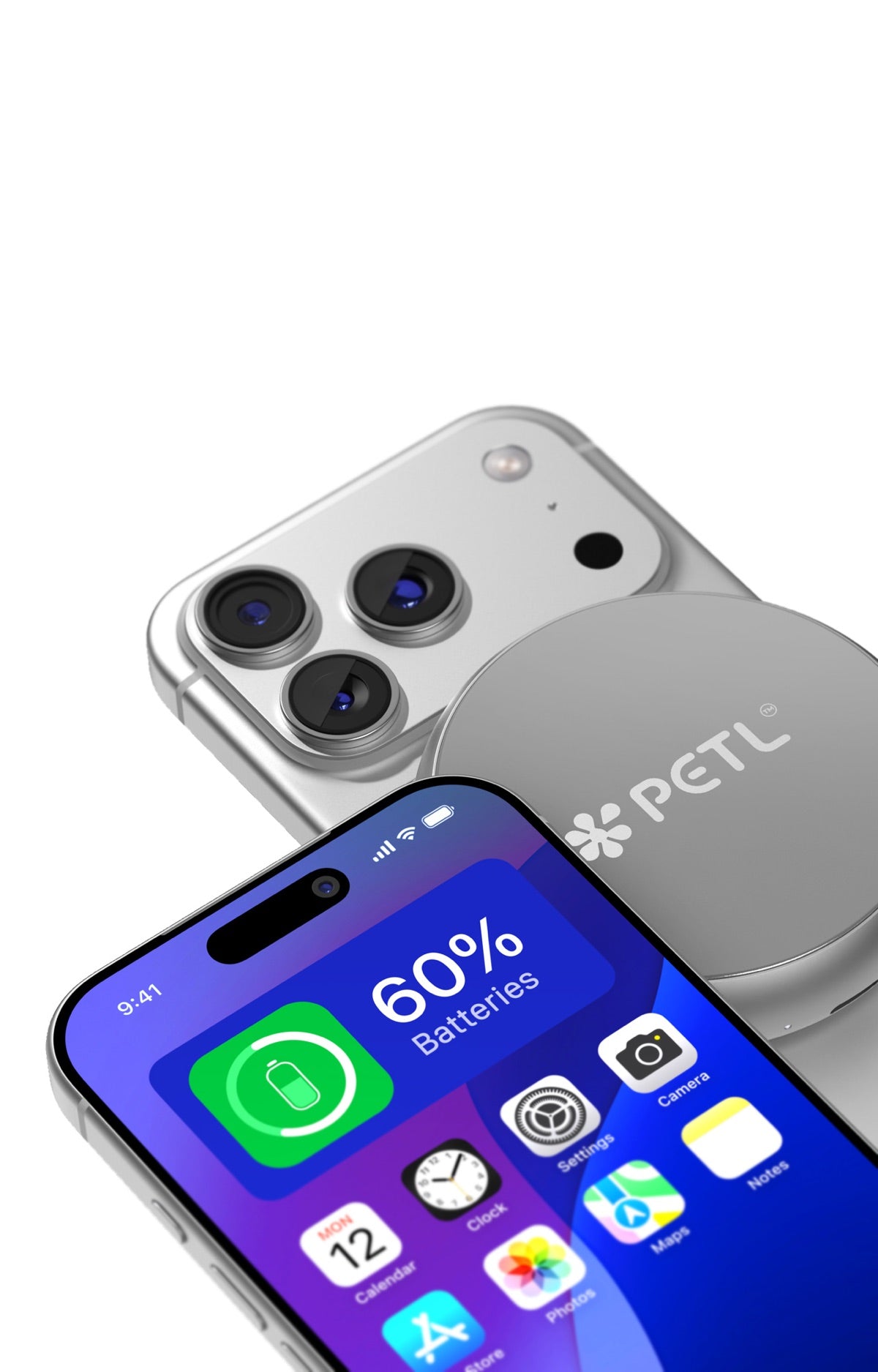
- PETL 2 Plus: 72.5mm wide, 16.2mm thin, circular disc form factor — lighter, smaller footprint, and shaped to match the MagSafe charging area on the back of your iPhone
That 104mm length isn't a catastrophe, but it's a noticeable presence in a front jeans pocket alongside an iPhone 16. The PETL 2 Plus's 72.5mm disc, by contrast, tucks alongside your phone without the awkward rectangular protrusion. On a commute, in a jacket pocket, or slapped on the back of your phone at a café, the difference is felt every single day — not just weighed once in a store.
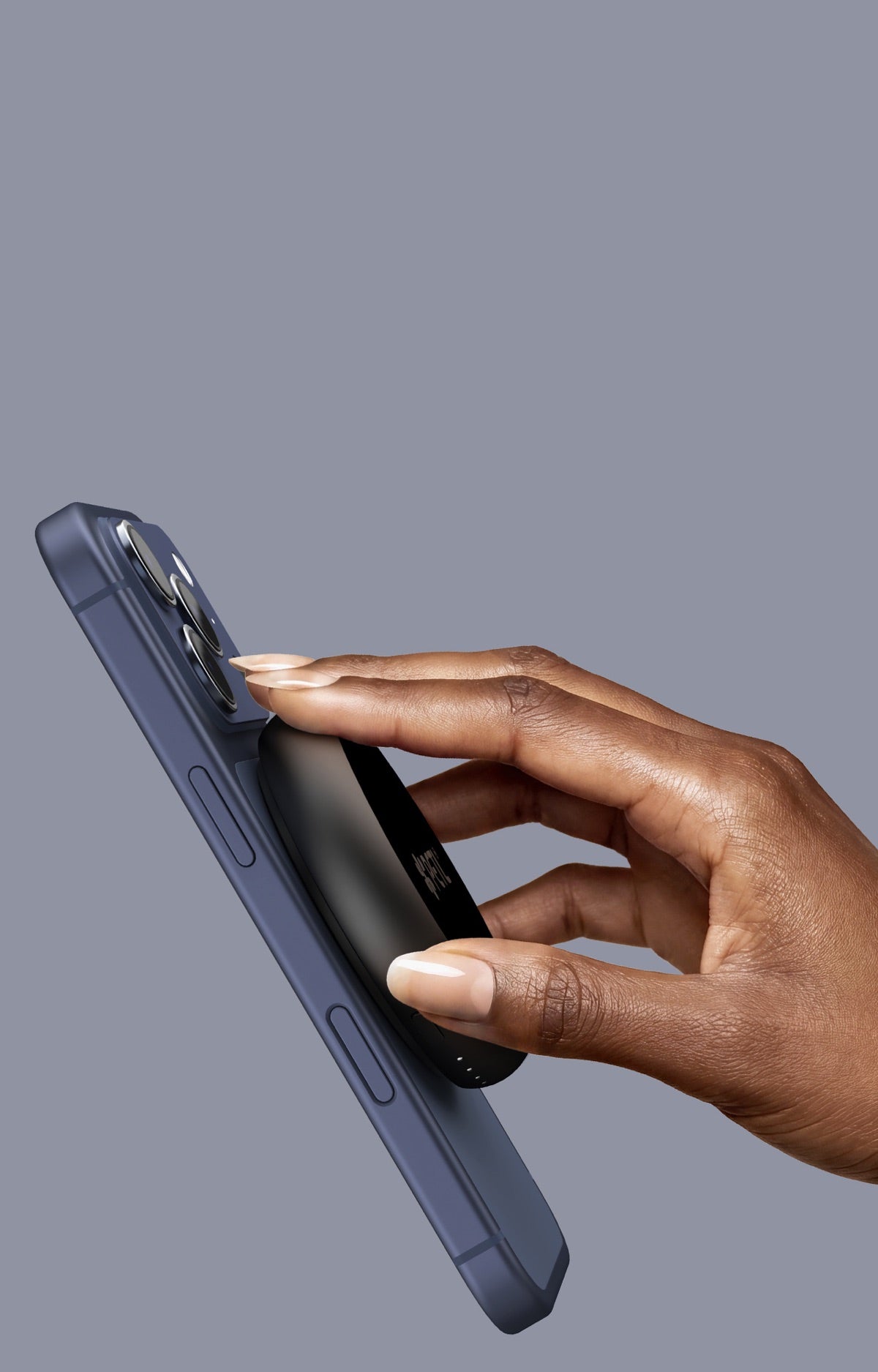
The PETL 2 Plus is also CNC-machined aluminum with a tempered glass top, secured by N52 neodymium magnets that snap firmly to iPhone 12 through iPhone 16. It's a piece of everyday carry you'd choose to have with you — not an accessory you tolerate because you have to. Priced at $89.95, it's built for the person who wants capable, coin-slim daily charging without the 10K bulk penalty.
Best MagSafe Power Bank Capacity: The Daily Carry Sweet Spot
Here's the honest framework for choosing the best MagSafe power bank capacity for your life:
- Count how many times per day you actually drain your iPhone. Most people drain it once — from a morning full charge to somewhere between 20–40% by bedtime. One top-up is all they need.
- Account for wireless efficiency losses. A 5,000 mAh pack delivers roughly one full wireless charge to a standard iPhone 16. A 3,000 mAh pack delivers a strong top-up — pushing a depleted phone back above 80% — enough to get through the rest of the day with confidence.
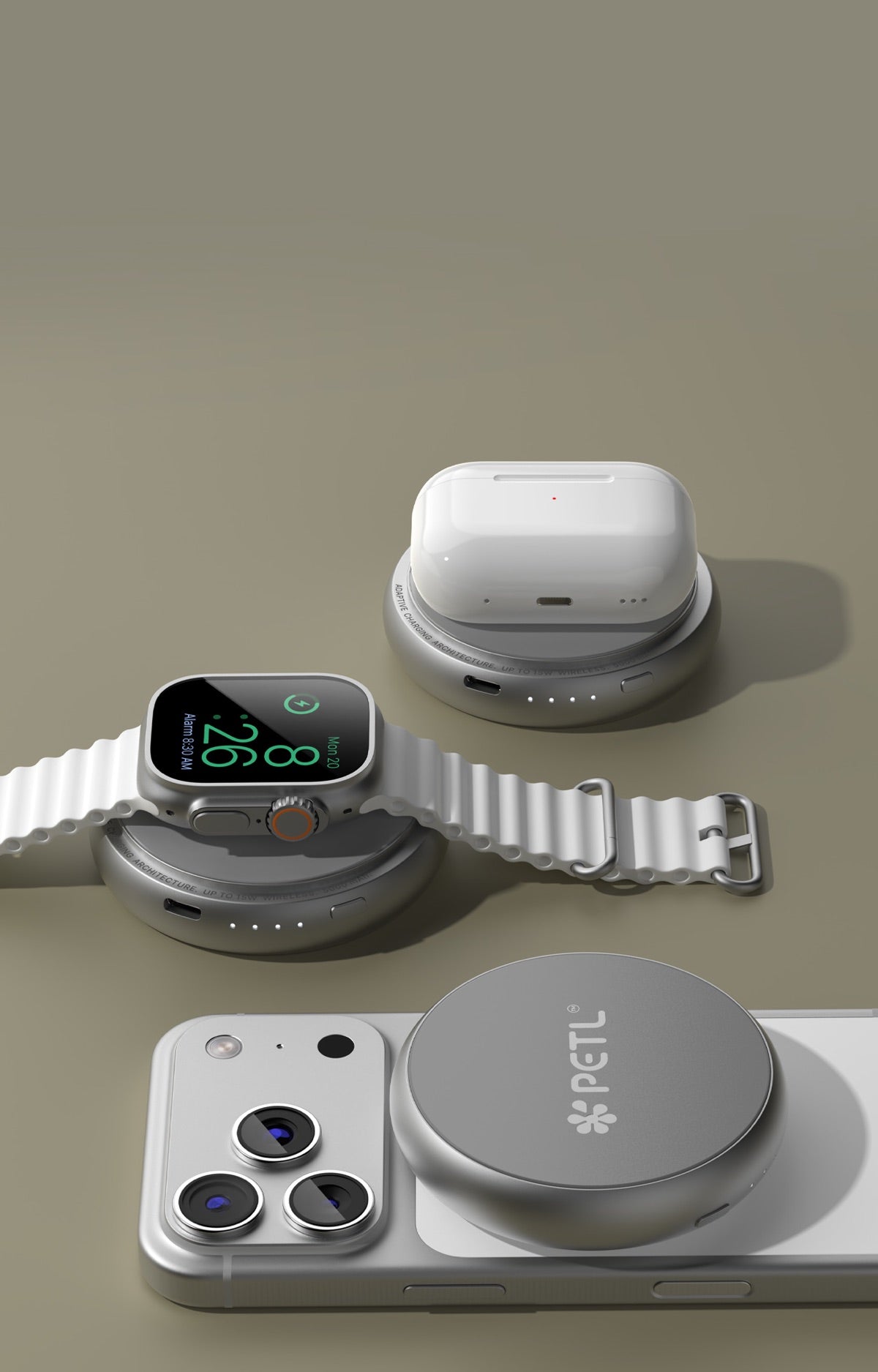
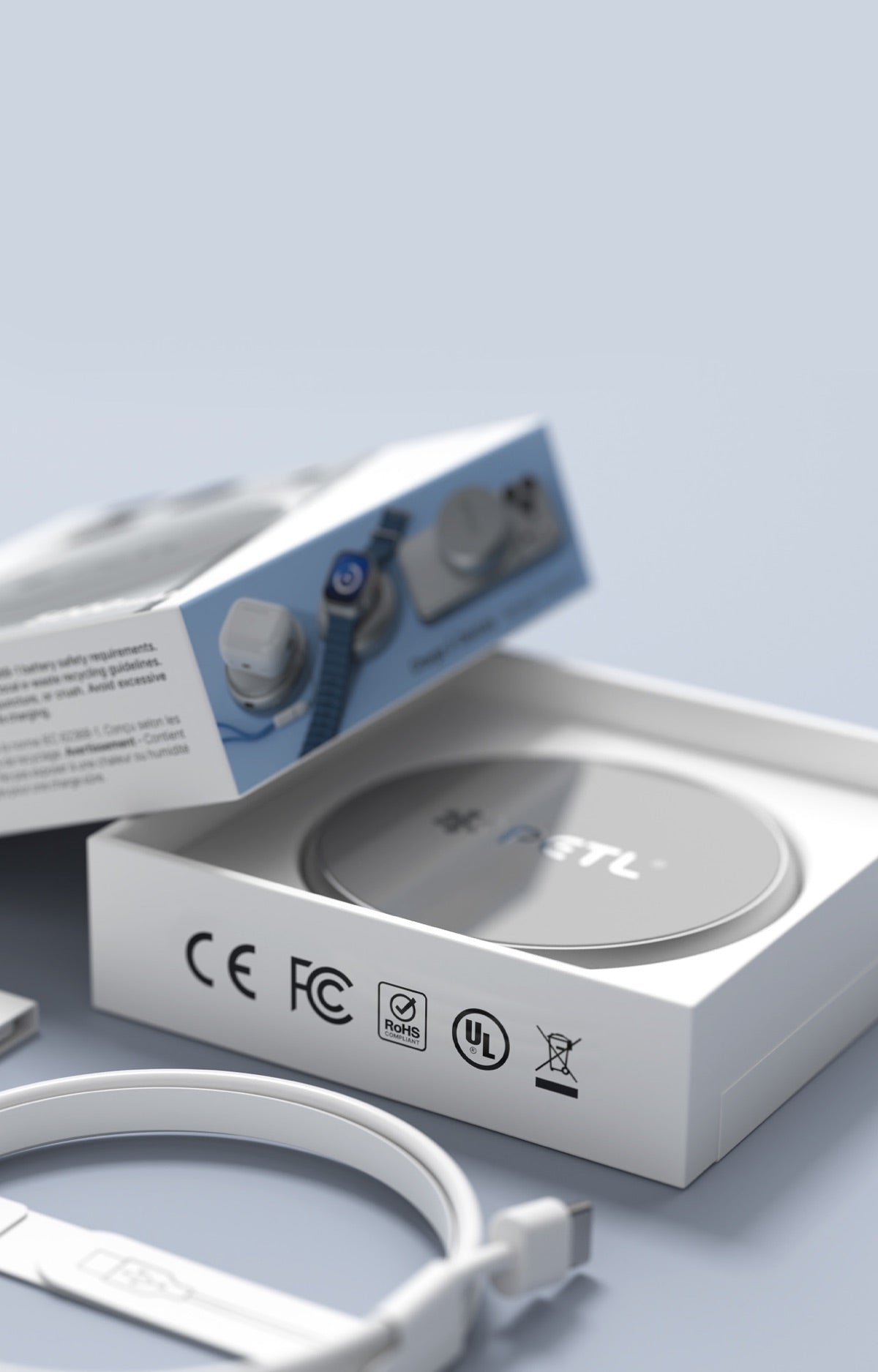
- Factor in your other Apple devices. If you also carry AirPods and an Apple Watch, a pack that wirelessly charges all three from one disc is worth far more than raw mAh alone. The PETL and PETL 2 Plus both handle iPhone, AirPods, and Qi-compatible Apple Watches — no cables, no apps, no setup.
- Be honest about your carry situation. Pocket carry rewards slim and light. Backpack carry can accommodate more. Match the pack to how you actually move through your day.
Two PETL Sizes, Honestly Described
PETL makes two sizes. Here's a straight-talking summary of what each one does — and who it's genuinely for:
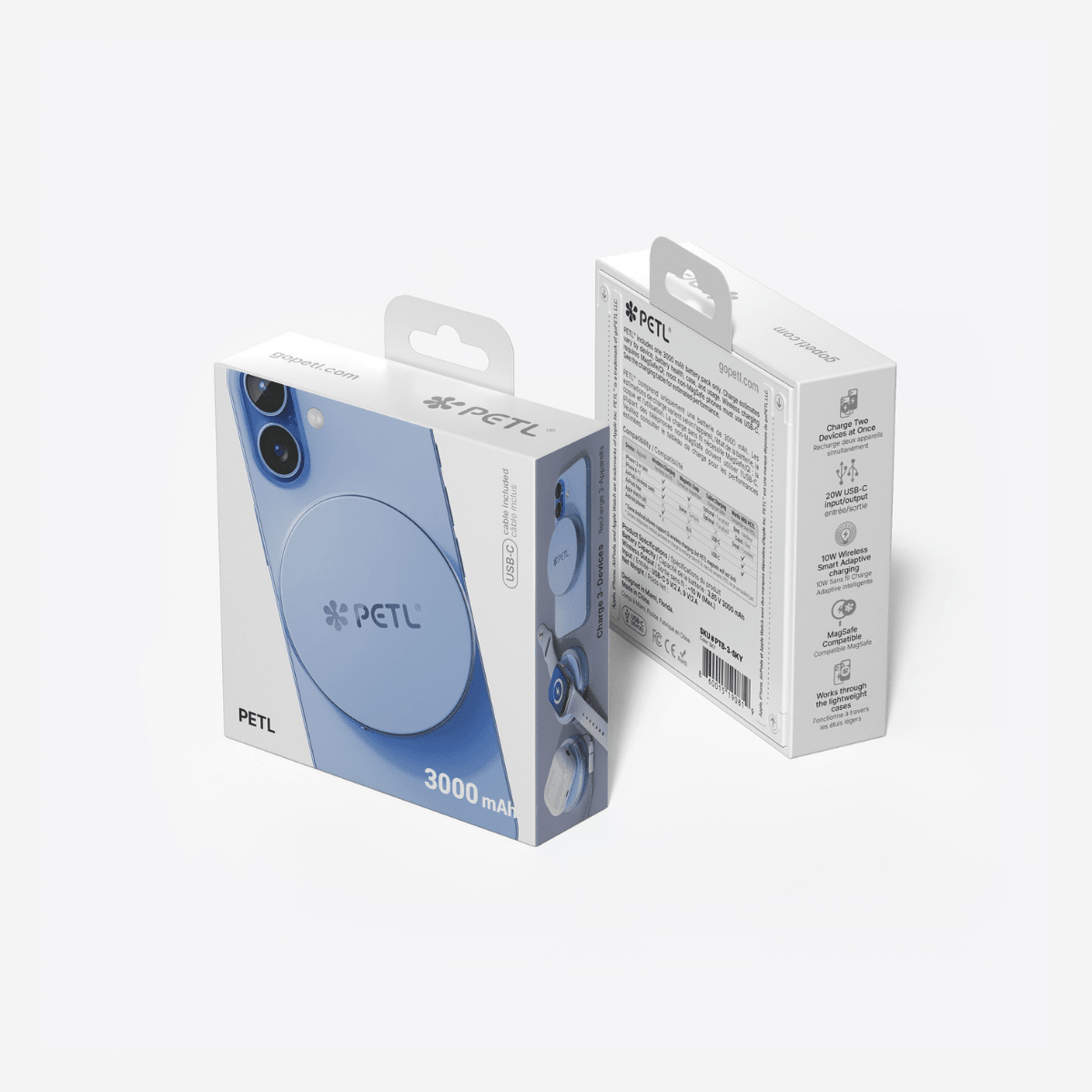
PETL Original (3,000 mAh) — priced at $64.95
The original PETL is 70mm wide and just 14mm thin. Its 3,000 mAh cell delivers strong, confident top-ups throughout the day — the kind that push you from 20% back to 80%+ and carry you to bedtime without drama. It's right-sized for daily carry, promises up to 10 extra hours of talk time, and handles iPhone, AirPods, and Apple Watch without cables. If your day is predictable and you just want reliable insurance without any bulk, this is your disc.
PETL 2 Plus (5,000 mAh) — priced at $89.95
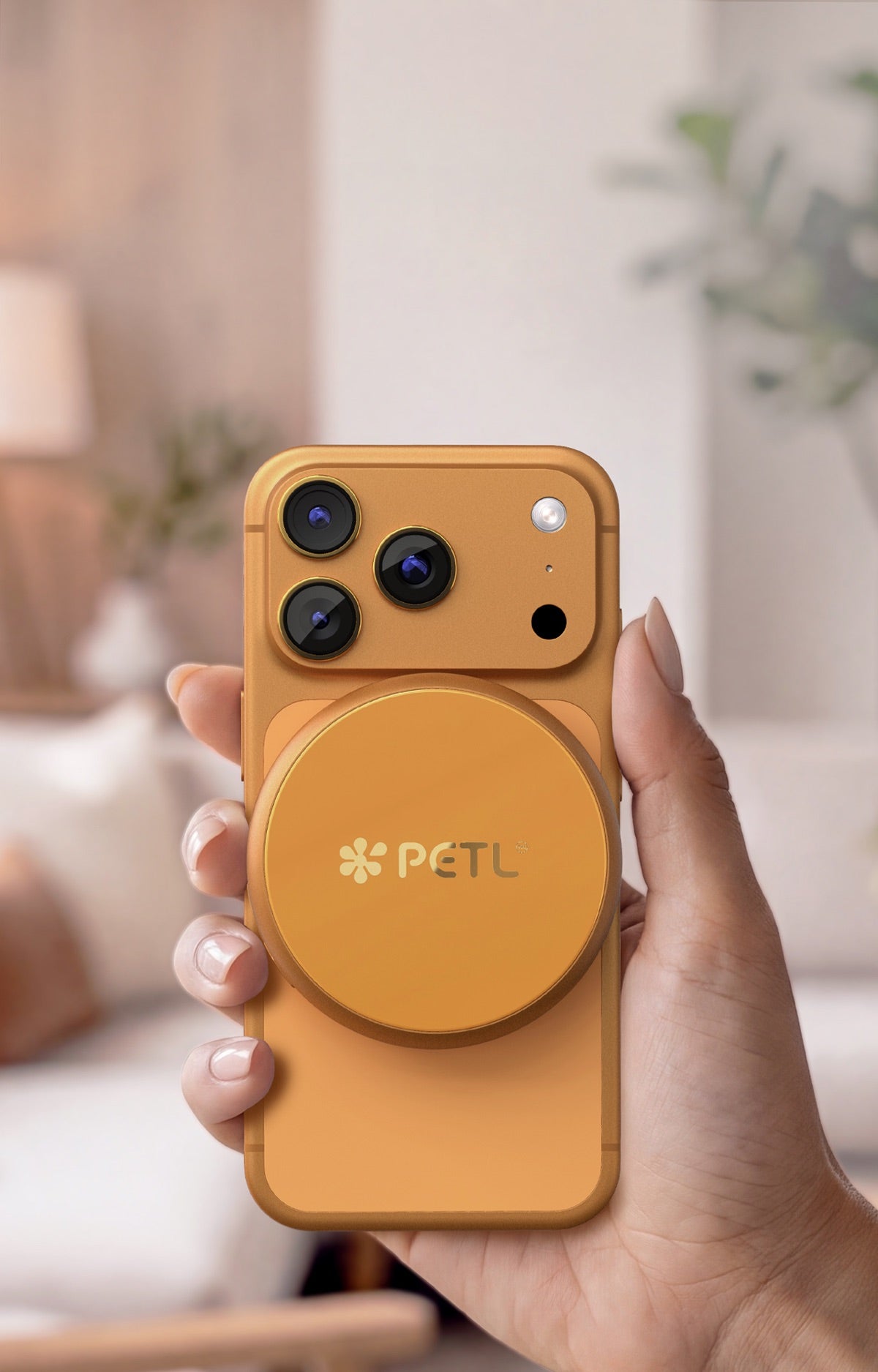
The PETL 2 Plus steps up to 5,000 mAh in a 72.5mm wide, 16.2mm thin form factor — still a disc, still pocketable, but with enough raw capacity for a near-full wireless recharge of your iPhone 16 plus top-ups for your AirPods and Watch. It promises up to 15 extra hours of talk time, charges at up to 15W via Qi wireless, and supports USB-C passthrough. It shows up natively in your iOS battery widget with no app required. Available in Space Black, Cosmic Orange, and Slate — finishes chosen to feel like an accessory, not a gadget.

Who PETL Is NOT For (And Why We're Telling You)
PETL is not the biggest battery on the market. That's intentional — and worth being explicit about.
PETL is not the right choice if you need multiple full recharges per day. If you drain your iPhone to zero twice before dinner, or if you're doing multi-day off-grid travel, you need a 10,000 mAh or larger pack and you should buy one without hesitation. The Anker MagGo 10K is a solid product for that use case.
PETL exists for everyone else — the daily commuter, the light-to-moderate user, the person who wants one slim disc that covers iPhone, AirPods, and Apple Watch without adding a brick to their pocket. That's a large majority of iPhone users, and they're consistently being told they need more capacity than their life actually demands.
Quick Decision Guide: 5,000 mAh vs 10,000 mAh
- Choose 5,000 mAh if: you drain your iPhone once per day, carry a pocket or small bag, want wireless charging for iPhone + AirPods + Apple Watch, and value form factor as much as function
- Choose 10,000 mAh if: you drain your phone twice daily, travel multi-day without outlets, charge multiple people's devices, or always carry a backpack where size is irrelevant
- Consider 3,000 mAh if: you just want confident top-ups — not a full recharge — and want the slimmest, lightest possible daily disc
The best power bank capacity isn't the highest number on the shelf. It's the one that matches your actual usage without adding friction to every day you carry it. For most iPhone users reading this, that number is 5,000 mAh — or less.
Explore the PETL 2 Plus and original PETL at gopetl.com and see which disc fits your day.
Frequently asked questions
What is the difference between a 5,000 mAh and 10,000 mAh power bank?
A 10,000 mAh power bank stores twice the raw energy of a 5,000 mAh pack, delivering roughly two full wireless iPhone charges versus one. But doubling the capacity also means a noticeably larger, heavier form factor, a higher price, and a longer self-recharge time. For most daily iPhone users who drain their phone once per day, a 5,000 mAh pack is sufficient — and far more pocketable.
Is 5,000 mAh enough to charge an iPhone 16?
Yes, for one near-full wireless recharge. The iPhone 16 has approximately 3,561 mAh of battery capacity. After accounting for wireless charging efficiency losses (typically 70–80%), a 5,000 mAh pack delivers enough charge to take an iPhone 16 from near-zero to close to full in a single wireless session.
How many mAh do I need to charge an iPhone wirelessly?
To wirelessly deliver a full charge to a standard iPhone 16 (approximately 3,561 mAh battery), you need a pack with roughly 4,400–5,000 mAh of raw capacity to cover inductive efficiency losses. For a strong top-up — pushing from 20% back above 80% — a 3,000 mAh pack is often sufficient for everyday use.
How does the PETL 2 Plus compare to the Anker MagGo 10K?
The Anker MagGo 10K offers roughly double the raw capacity (10,000 mAh vs 5,000 mAh) and can deliver approximately two full wireless iPhone charges. However, it measures approximately 104mm long and weighs around 200g — a noticeable presence in a pocket. The PETL 2 Plus is a 72.5mm circular disc, 16.2mm thin, and significantly lighter, making it a better daily carry choice for users who need one reliable recharge per day. The PETL 2 Plus also wirelessly charges Apple Watch and AirPods from the same disc.
Can a MagSafe battery pack charge Apple Watch and AirPods?
Not all MagSafe battery packs can. The Apple-branded MagSafe Battery Pack, for example, does not charge Apple Watch. The PETL and PETL 2 Plus both support Qi wireless charging, enabling them to charge iPhone, AirPods, and Qi-compatible Apple Watches from a single disc — no cables or extra accessories required.
Who should NOT buy a 5,000 mAh MagSafe power bank?
A 5,000 mAh pack is not the right choice if you drain your iPhone to zero more than once per day, if you're doing multi-day travel without outlet access, or if you regularly need to charge multiple people's devices from one pack. In those cases, a 10,000 mAh or larger pack — even with the added bulk — is the more practical investment.

Share:
PETL vs Petzl: Are They the Same Brand? (No — Here's the Difference)
PETL vs Anker MagGo: Best MagSafe Battery Pack in 2025?