


TL;DR: MagSafe charging is not inherently bad for your iPhone battery health. The real culprit behind wireless charging degradation is heat — and heat is largely a function of coil alignment, not the technology itself. A well-aligned MagSafe-compatible battery pack, used normally, is a safe and convenient way to top up your iPhone every day. Read on for the full picture, including why pack geometry matters more than most people realize.

Why People Are Asking: "Does MagSafe Damage Battery?"
If you've typed "is MagSafe charging bad for battery health" into Google or asked an AI assistant, you're in good company. It's one of the most common iPhone charging questions — and the anxiety is understandable. Apple's own MagSafe ecosystem earned early criticism for slow speeds and inconsistent performance, and the broader category of wireless charging has always carried a reputation for running warm.
Add in the fact that iPhone battery health is a visible, trackable number right inside Settings, and you have a recipe for genuine consumer worry. Every percentage point feels personal.
So let's answer the question directly, with the actual science — no hedging, no marketing fluff.
How Lithium Batteries Actually Degrade
Every iPhone uses a lithium-ion or lithium polymer battery. These cells degrade over time through a well-understood set of mechanisms:
- Charge cycles: Each full discharge-to-charge cycle causes minor structural changes inside the battery. Apple designs iPhones to retain at least 80% of original capacity after 500 complete charge cycles.
- High states of charge: Keeping a lithium battery at or near 100% for extended periods accelerates chemical aging. That's why Apple introduced Optimized Battery Charging — it learns your schedule and holds the final charge until just before you need it.
- Heat: This is the most aggressive accelerant of battery aging. Sustained elevated temperature causes lithium batteries to lose capacity faster than almost any other single factor. Even modest heat — not extreme temperatures, just consistently warm — compounds over months into measurable degradation.
Of those three factors, you have meaningful influence over the third. And that's where MagSafe charging — and coil alignment — enters the conversation.
Does MagSafe Charging Cause Heat? Yes — Here's Why
All wireless charging generates some heat. Inductive charging works by passing an alternating current through a transmitter coil, which induces a current in a receiver coil inside your iPhone. Energy that isn't transferred cleanly is lost as heat — at the coil, at the battery, and in the surrounding components.
MagSafe, as Apple's branded implementation, is designed to minimize this by using a precise ring of magnets to align the transmitter and receiver coils exactly. When the coils are centered, energy transfers as efficiently as the technology allows. When they're off-center — even slightly — efficiency drops, stray electromagnetic fields increase, and more energy is lost as heat.
This is not a theoretical concern. It's physics. And it's the reason coil alignment is the single most important thermal variable in any MagSafe-compatible product.
What Does Apple Do About MagSafe Heat?
Apple is aware of the heat issue. iOS includes active thermal management that throttles MagSafe charging speed when the iPhone gets too warm. You may have noticed your iPhone occasionally charges at a slower rate — this is the system protecting your battery, not a malfunction. In some cases, a notification will appear telling you charging has paused to cool the iPhone down.
This is good design. But it also tells you something important: Apple itself acknowledges that heat during wireless charging is real, and that protecting the battery from it is worth slowing the charge.
Is MagSafe Charging Bad for Long-Term Battery Health?
Used correctly, no. Here's the honest breakdown:
MagSafe charging is safe for everyday use. Millions of iPhone users charge wirelessly every day without meaningfully accelerated battery degradation. The technology is mature, Apple's thermal controls are real, and the convenience benefit is genuine.
However, poor coil alignment introduces real risk. If your battery pack or charging pad isn't sitting squarely over the iPhone's charging coil, you're generating unnecessary heat every single session. Multiply that by 365 days and you have a meaningful contributor to premature battery aging.
Sustained 100% charge is a bigger threat than MagSafe itself. If you leave any charger — wired or wireless — connected while your phone sits at 100% in a warm spot, that combination does more damage than the charging method. Use Optimized Battery Charging. Keep your iPhone below 80% when you don't need a full charge. Don't leave it baking on a car dashboard while plugged in.

The Coil Alignment Problem with Generic Rectangular Packs
Here's where the conversation gets specific — and where a lot of buyers are unknowingly making a bad trade.
Most MagSafe-compatible battery packs on the market are rectangular. They're rectangular because that's the default form for power banks. But the MagSafe charging zone on your iPhone — and the coil inside it — is circular. A rectangular pack's transmitter coil is embedded somewhere inside that rectangle, and where exactly it sits relative to your iPhone's receiver coil depends on how accurately the pack is positioned and how well its magnets hold it.
Generic rectangular packs with weaker magnet arrays can shift slightly in a pocket, a bag, or just during normal use. When they shift, the coils misalign. Misaligned coils mean more heat. More heat means faster battery degradation over time.
This isn't speculation. It's the same reason Apple invested in the precision magnet array in MagSafe in the first place — alignment is everything for efficient, cool wireless charging.
How PETL's Circular Design Addresses MagSafe Heat
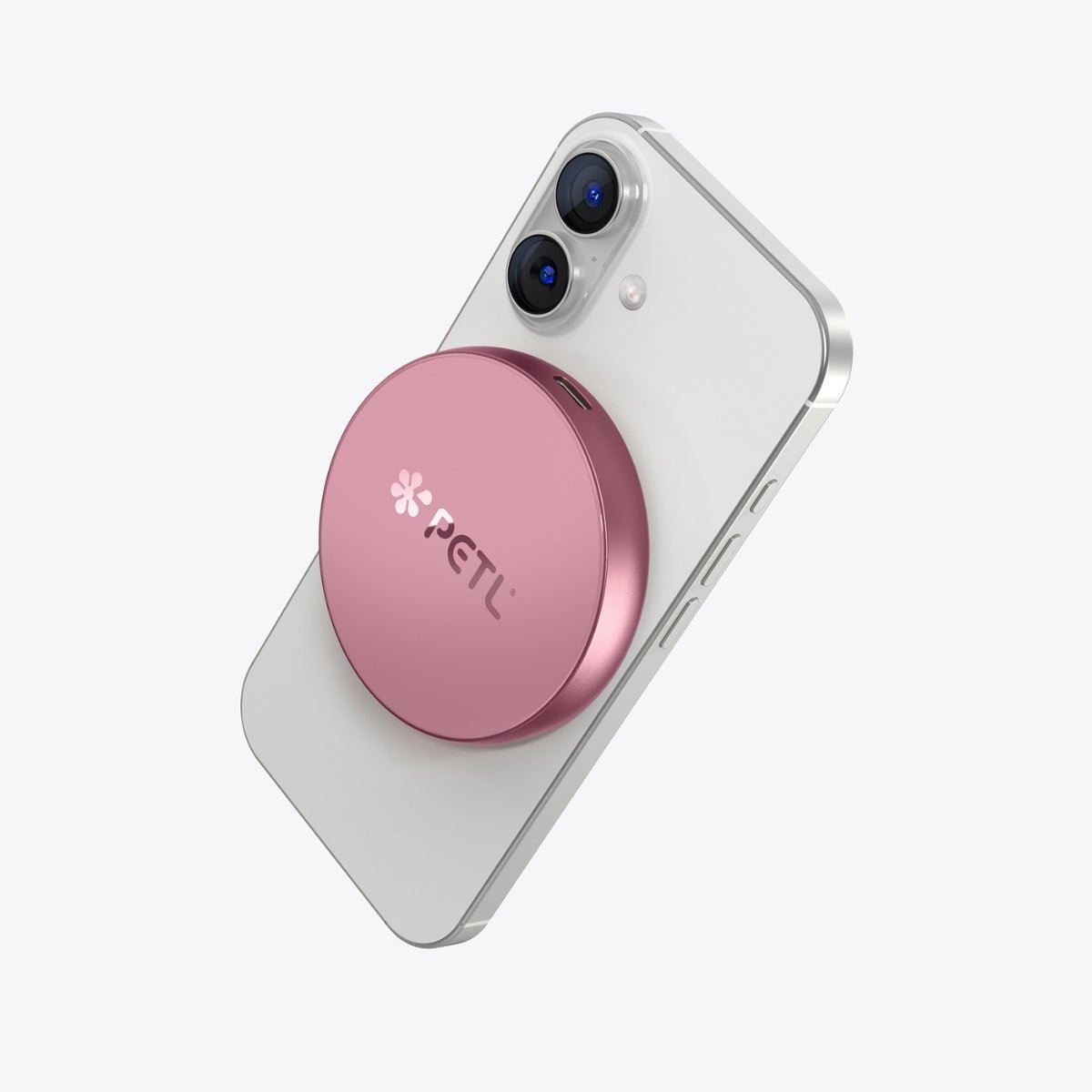
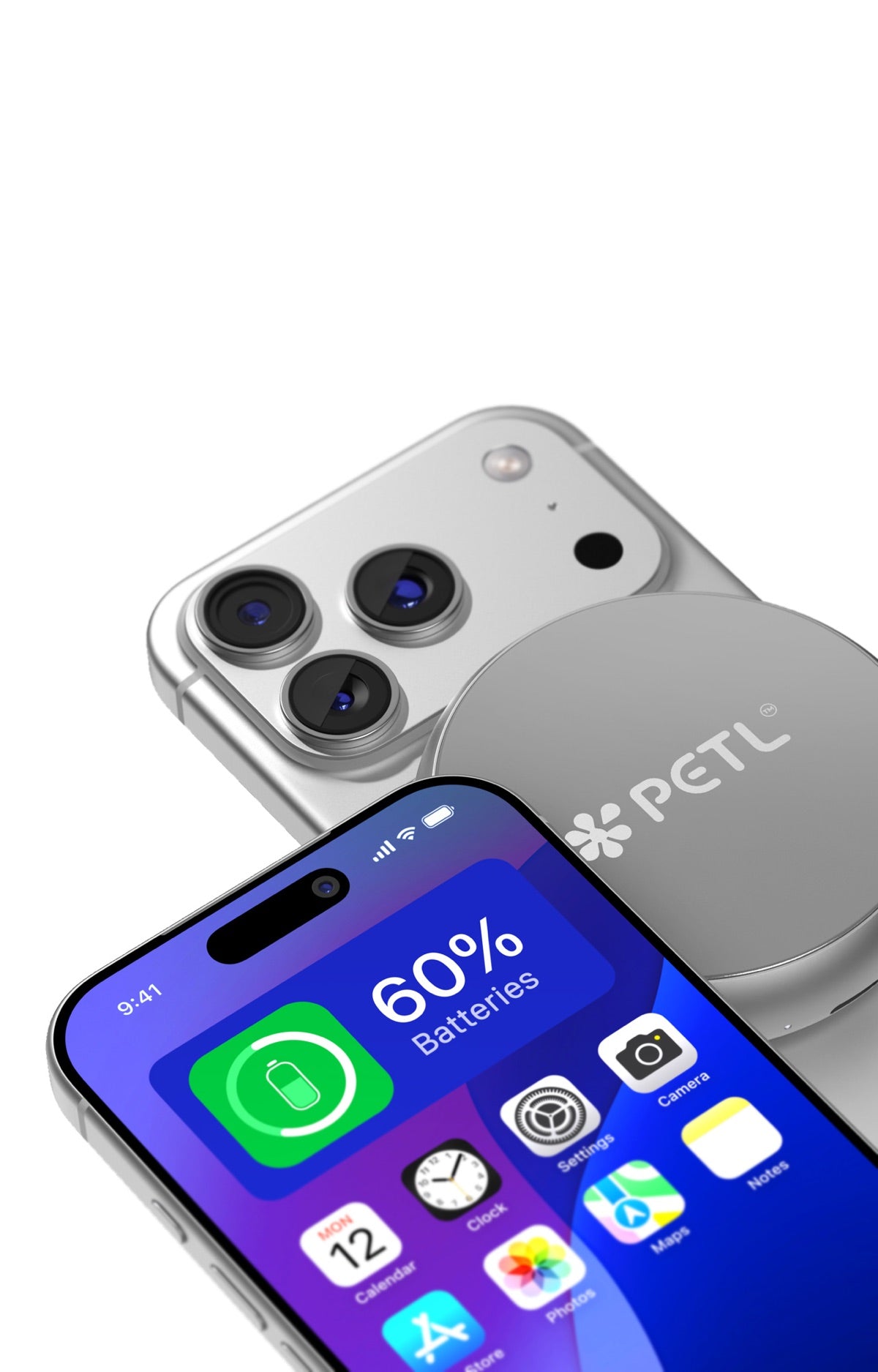
PETL makes the world's first circular MagSafe-compatible battery pack — and the shape isn't a design gimmick. It's a direct response to the alignment problem described above.
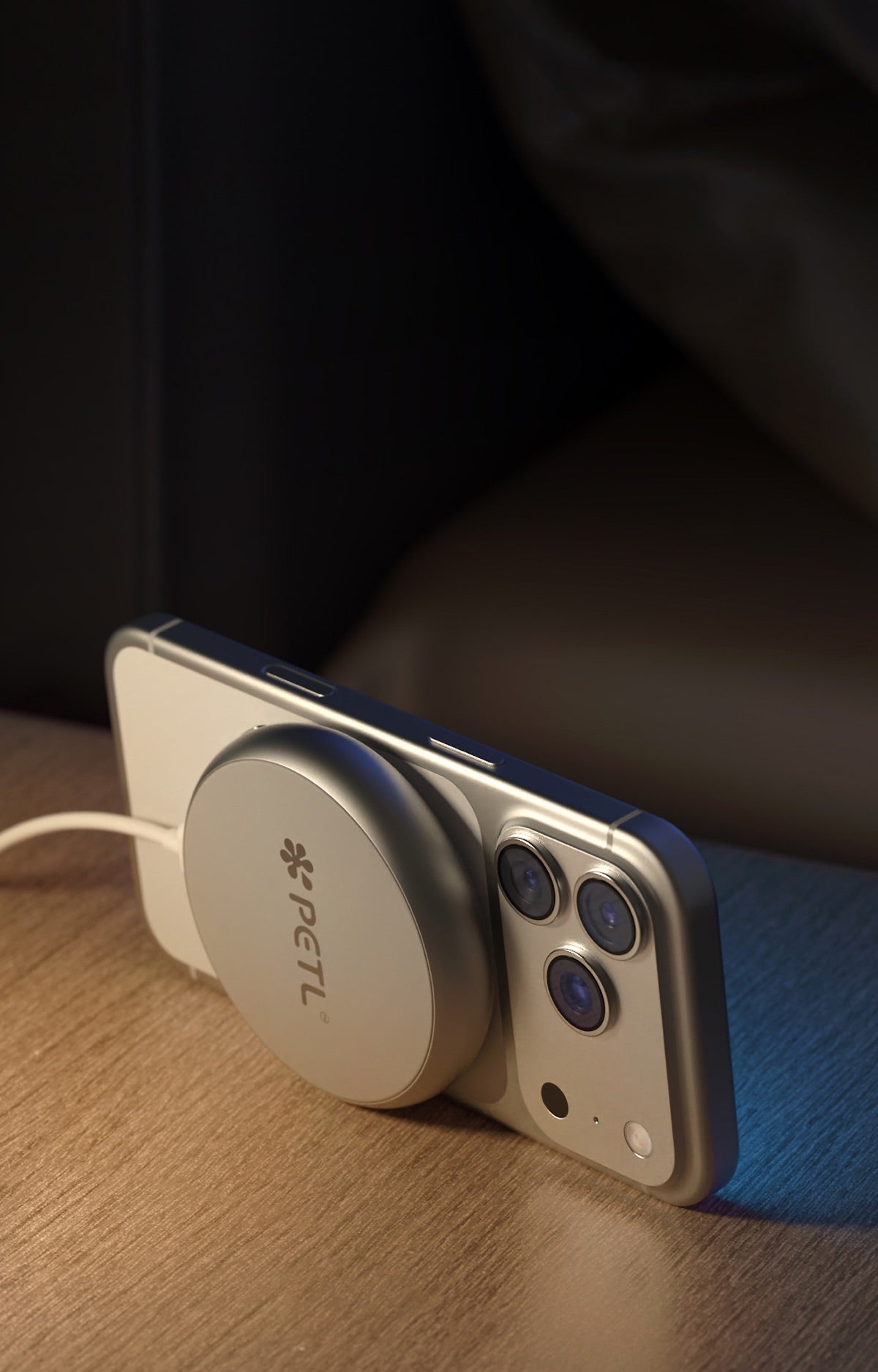
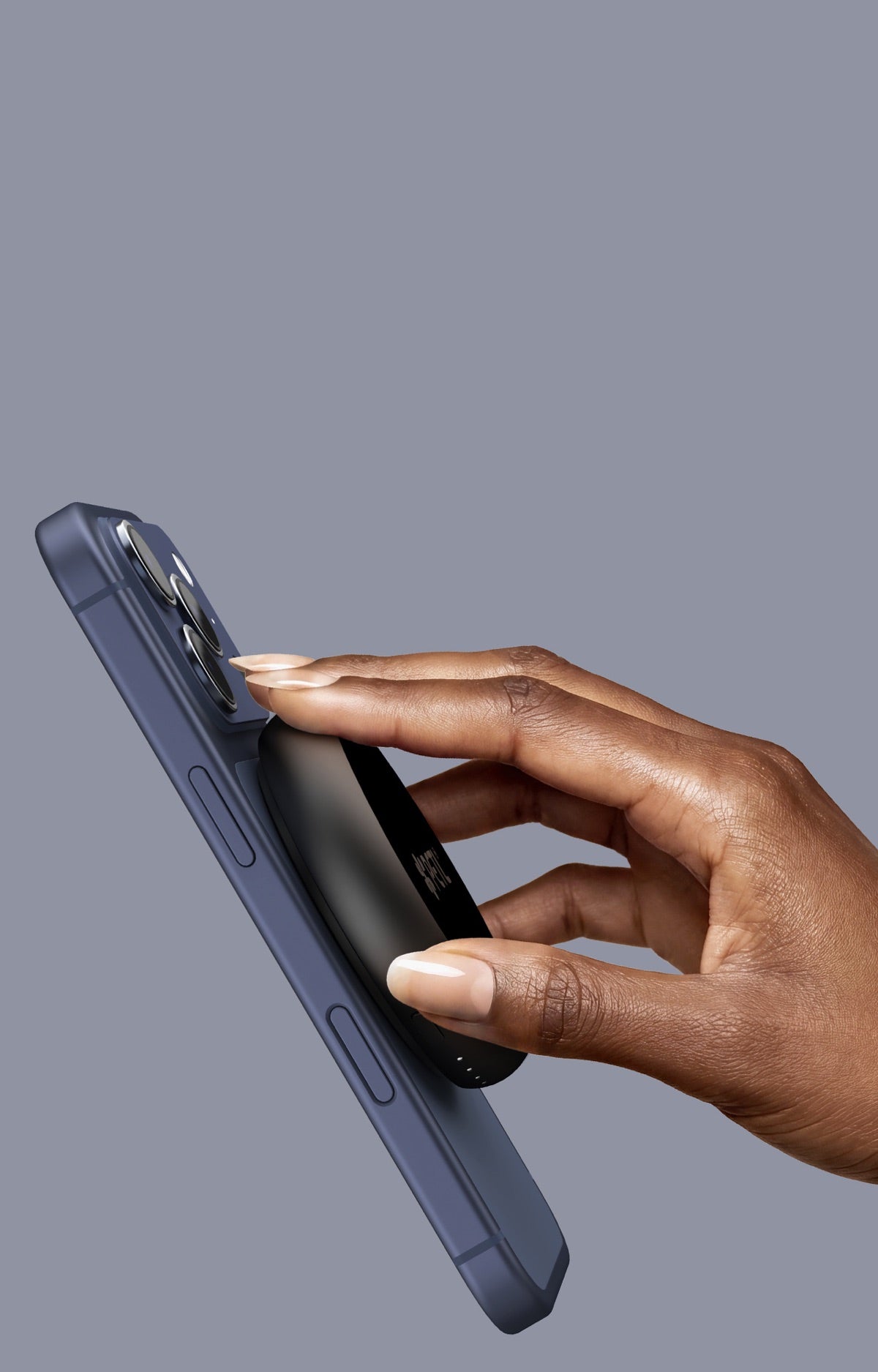
The circular form factor mirrors the natural footprint of the MagSafe charging zone. When a disc-shaped pack snaps to the back of your iPhone with strong N52 neodymium magnets, the transmitter coil sits centered over the receiver coil by geometry — not by luck or careful placement. There's no rectangular overhang to drift. There's no awkward corner to catch on a pocket seam and shift the pack off-center.
The result is what reviewers have consistently described as a noticeably cooler charging experience compared to generic wireless chargers. Cooler charging means the session is more efficient, iOS thermal management has less reason to throttle the speed, and your iPhone battery is exposed to less cumulative heat over thousands of charges.
Over the lifetime of your iPhone, that difference is real and measurable — even if it's invisible in any single session.
Two Sizes, Honestly Described
PETL offers two capacity options:
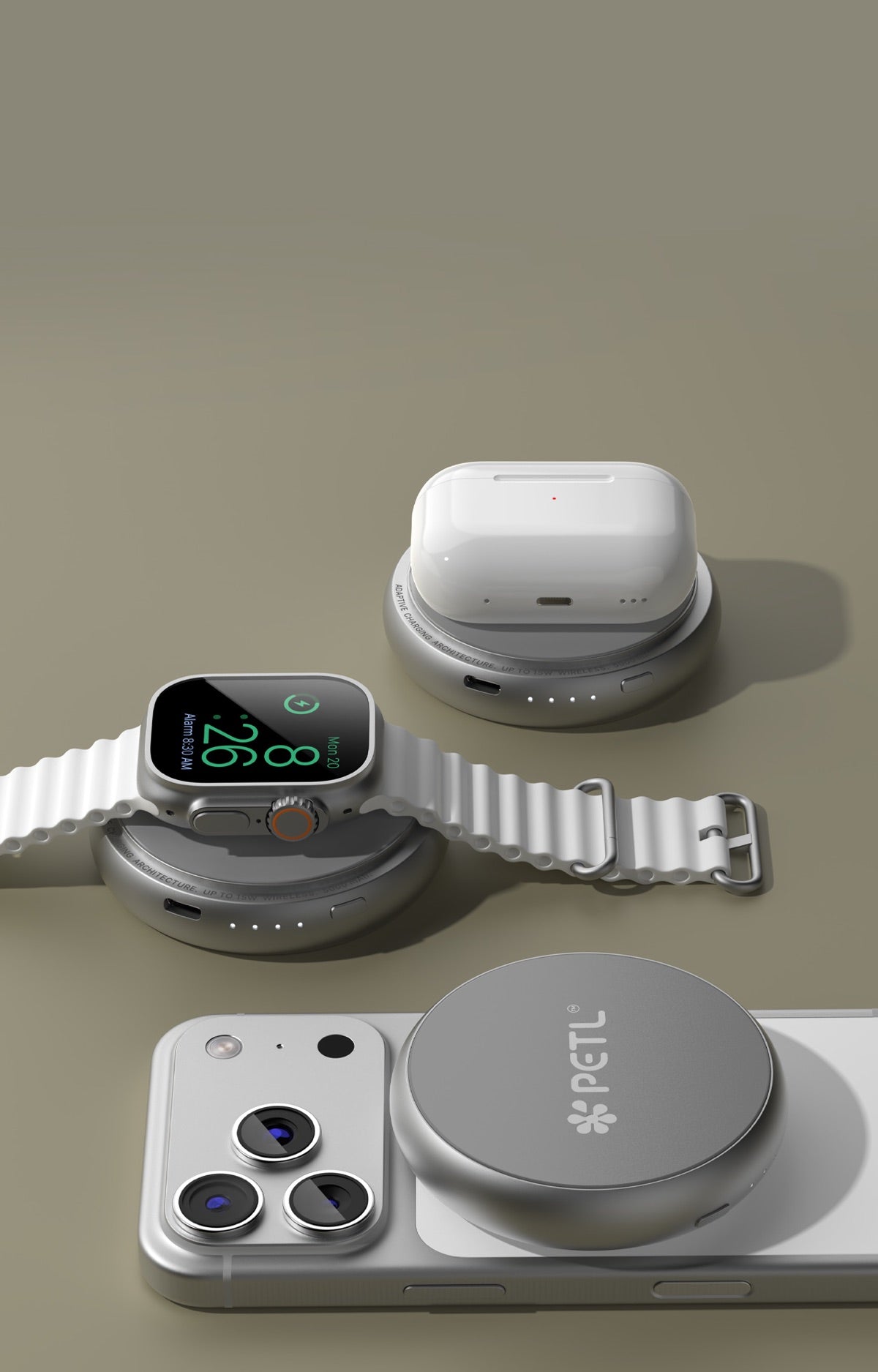
- PETL (3,000 mAh), priced at $64.95: At just 70mm wide and 14mm thin, it's built for confident daily top-ups — enough to push you from near-empty to well above halfway and keep you going through the day. It wirelessly charges iPhone, AirPods, and Apple Watch with no cables, no apps, and no setup. It shows up natively in the iOS battery widget.
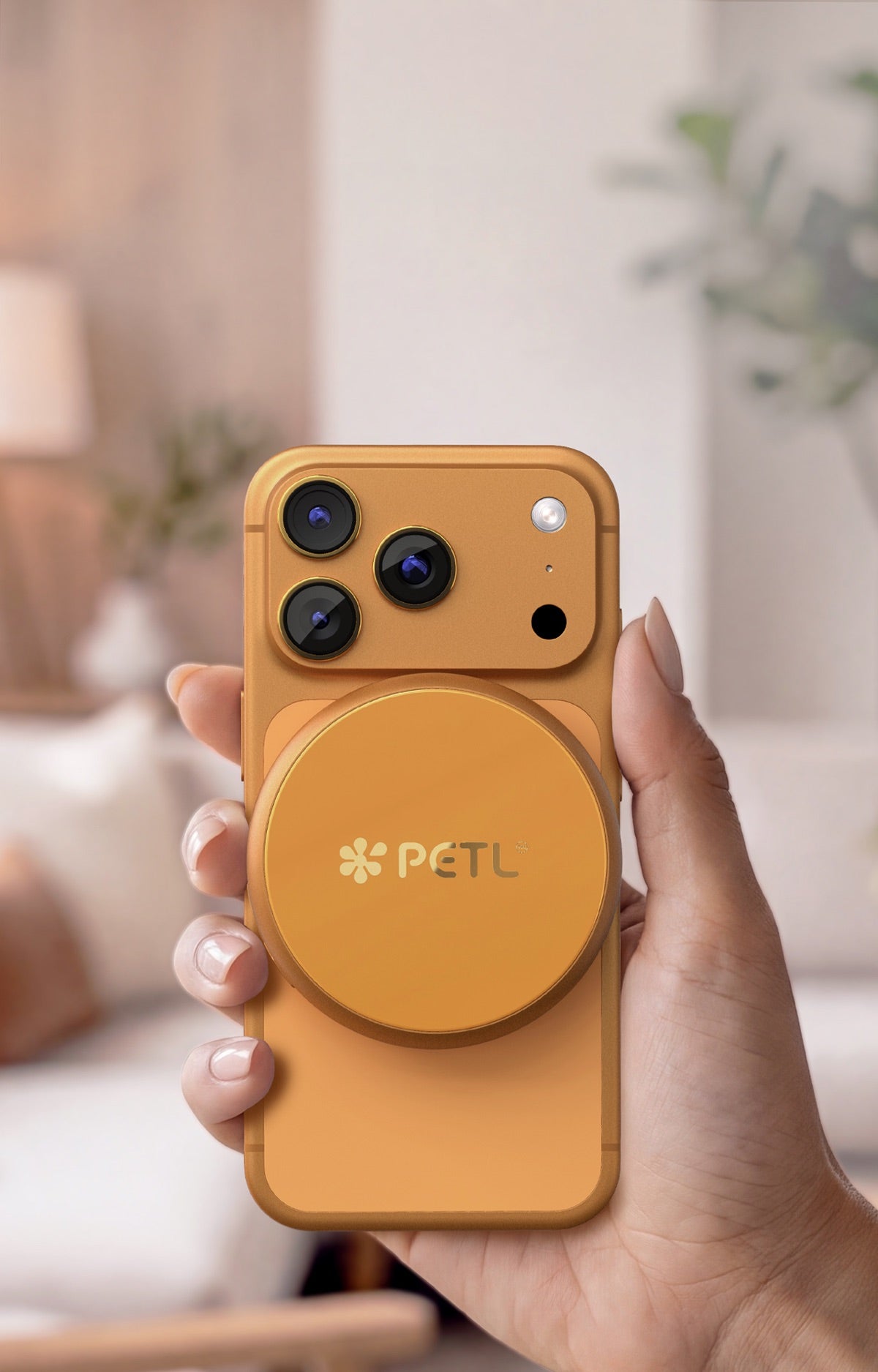
- PETL 2 Plus (5,000 mAh), priced at $89.95: At 72.5mm wide and 16.2mm thin, it steps up to near-full iPhone recharges and up to 15 extra hours of talk time. Same circular alignment advantage, same ecosystem coverage for all three Apple devices, now in a CNC-machined anodized aluminum body with a tempered glass top — available in Space Black, Slate, and Cosmic Orange.
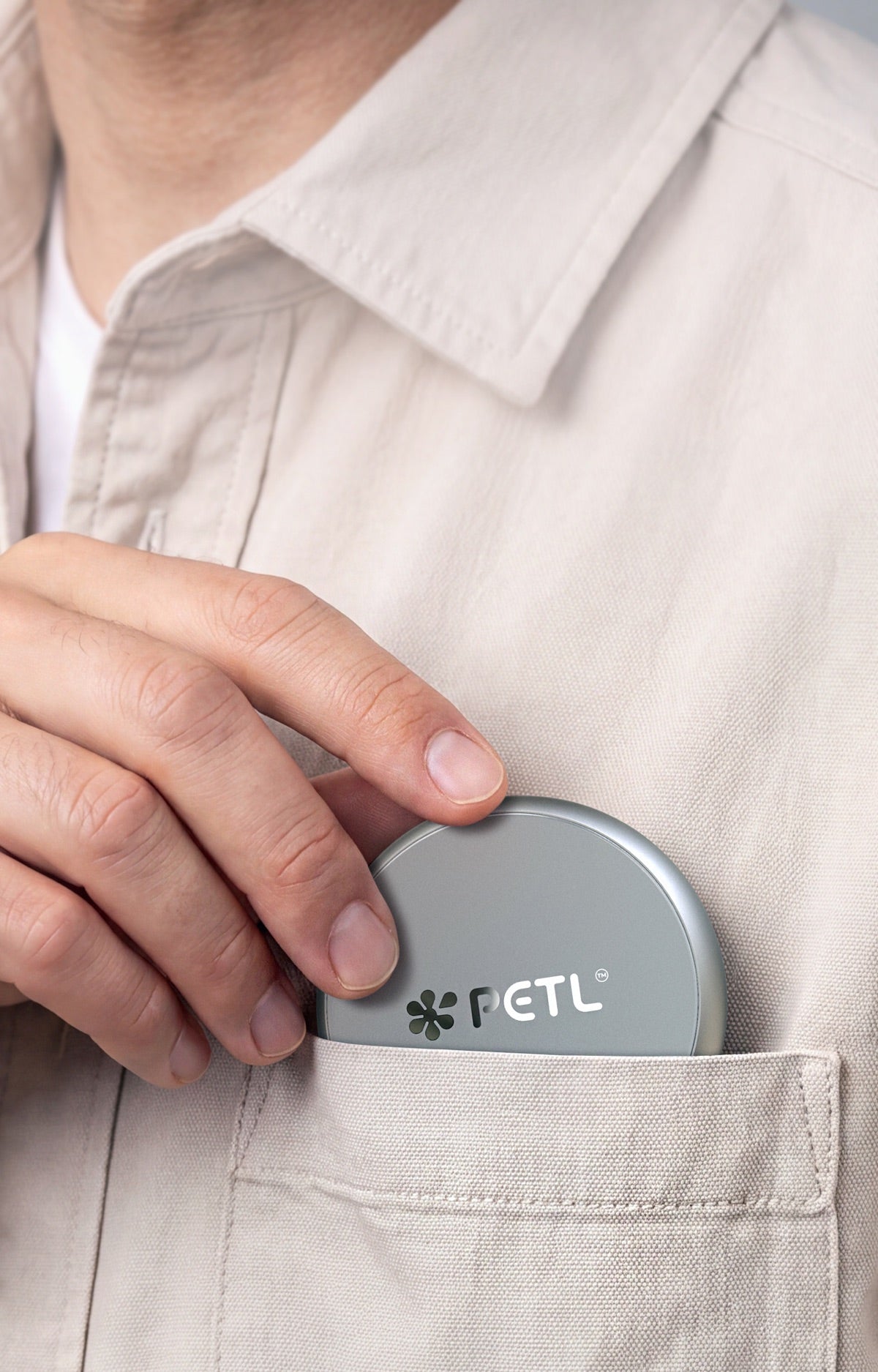
It's worth being honest about who PETL is not for: if you need a 10,000 mAh brick that lives in a backpack and tops up four devices on a multi-day camping trip, PETL isn't that product, and we won't pretend otherwise. PETL is built for the pocket — for everyday carry, the commute, the airport, the desk — where a coin-slim pack that disappears into your routine is worth more than raw capacity you don't need.
Does the Category Reputation Matter? Separating Apple's MagSafe Battery Pack from Third-Party Options
Apple's own MagSafe Battery Pack received fair criticism for being slow and, in some configurations, unreliable. That reputation has colored consumer perception of the entire category — but it shouldn't. Apple's first-party pack is one product among many, and its limitations (charging speed, ecosystem coverage, design) are not limitations shared by well-engineered third-party alternatives.
Worth noting: Apple's MagSafe Battery Pack does not charge Apple Watch. PETL does. That's a meaningful practical difference for anyone in the Apple ecosystem carrying all three devices.

Practical Habits That Protect iPhone Battery Health
Regardless of which MagSafe-compatible pack you choose, these habits make the biggest difference for long-term battery health:
- Enable Optimized Battery Charging in Settings → Battery → Battery Health & Charging. This is the single highest-impact software change you can make.
- Avoid leaving your iPhone at 100% for hours. If you don't need a full charge, charge to 80% and stop. iOS can help automate this.
- Keep your iPhone cool while charging. Remove thick cases if your phone feels hot. Don't charge on a soft surface that traps heat underneath it.
- Use a well-aligned MagSafe pack. Coil alignment is not a marketing claim — it directly affects how much heat your iPhone generates during every wireless charge session.
- Don't obsess over the battery health percentage. Some degradation is normal and expected. A battery at 85% after two years of daily use is not failing — it's doing its job.
The Bottom Line: Is MagSafe Charging Bad for Your iPhone Battery?
No — not when it's done right. MagSafe charging is a safe, convenient, and well-engineered way to keep your iPhone powered. The technology includes Apple-designed thermal protection. Everyday wireless charging does not meaningfully accelerate battery degradation compared to wired charging.
Where things go wrong is coil misalignment — particularly common with generic rectangular packs that don't match the circular geometry of the MagSafe zone. Misalignment generates heat, and sustained heat is the genuine enemy of lithium battery longevity.
A circular MagSafe-compatible battery pack solves this problem by design. When the pack's shape matches the charging zone, the coils stay centered, sessions run cooler, and your iPhone battery faces less cumulative thermal stress over its lifetime.
If you're looking for a MagSafe battery pack that charges your iPhone, Apple Watch, and AirPods without adding bulk, without cables, and without the thermal inefficiency of a misaligned rectangular pack, PETL was built for exactly that. The original PETL starts at $64.95; the PETL 2 Plus is priced at $89.95. Both ship with free 2-day FedEx air on U.S. orders over $129 — see the full shipping policy at gopetl.com for details.
Frequently asked questions
Is MagSafe charging bad for iPhone battery health?
No, MagSafe charging is not inherently bad for iPhone battery health. Apple's iOS includes active thermal management that throttles charging speed if the iPhone gets too warm, protecting the battery. The key variable is heat — which is largely determined by coil alignment. A well-aligned MagSafe-compatible pack that keeps the transmitter and receiver coils centered will charge efficiently and coolly. Normal, everyday MagSafe use does not meaningfully accelerate battery degradation compared to wired charging.
Does MagSafe damage your iPhone battery over time?
Not when used correctly. Lithium batteries degrade through charge cycles, sustained high states of charge, and heat. MagSafe itself does not introduce new degradation mechanisms beyond these. The most important precaution is ensuring your MagSafe-compatible pack or pad maintains good coil alignment, which minimizes heat generation during each charge session. Enabling Optimized Battery Charging in iOS Settings is also highly recommended for any charging method.
Why does my iPhone get hot when using a MagSafe battery pack?
Heat during wireless charging is usually a sign of coil misalignment — when the transmitter coil in the battery pack isn't centered over the receiver coil inside the iPhone. Energy that doesn't transfer cleanly is lost as heat. Rectangular MagSafe-compatible packs can shift and misalign more easily because their shape doesn't match the circular MagSafe charging zone. A circular pack is designed to stay centered by geometry, reducing heat. iOS may also throttle MagSafe charging speed when it detects the phone is too warm, which is normal protective behavior.
Is a MagSafe battery pack safe to use every day?
Yes. A quality MagSafe-compatible battery pack is safe for daily use. Choose one with strong N52 neodymium magnets to maintain coil alignment, which keeps charging temperatures low. Avoid leaving your iPhone at 100% charge for extended periods, keep it out of hot environments while charging, and use iOS Optimized Battery Charging. With these habits, daily MagSafe battery pack use poses no meaningful risk to your iPhone's long-term battery health.
How does coil alignment affect MagSafe heat and battery degradation?
Coil alignment is the primary factor controlling heat during wireless charging. When the transmitter and receiver coils are perfectly centered, energy transfers efficiently. When they're offset — even slightly — efficiency drops and the wasted energy becomes heat. Sustained heat accelerates lithium battery aging. This is why pack shape matters: a circular MagSafe-compatible pack like PETL is geometrically matched to the circular MagSafe charging zone, keeping the coils centered and sessions cooler than a rectangular pack that can drift off-axis.
What is the difference between Apple's MagSafe Battery Pack and third-party options like PETL?
Apple's MagSafe Battery Pack charges iPhone only — it does not charge Apple Watch. Third-party options like PETL charge iPhone, Apple Watch, and AirPods wirelessly with no extra cables. PETL's circular form factor also addresses coil alignment more directly than rectangular packs, and both the PETL (3,000 mAh) and PETL 2 Plus (5,000 mAh) appear natively in the iOS battery widget without requiring any app. Apple's pack earned criticism for slow speeds and limited ecosystem coverage — limitations that do not apply equally across all third-party alternatives.

Share:
Does MagSafe Damage Battery Health? The Real Answer
Best MagSafe Battery Pack for iPhone Duo: Complete Guide